The central tragedy of Michael Jackson's life, the one his sister La Toya, his children, and the friends who knew him in private have all returned to over the years, is that he was never permitted to be himself.
He was edited as a child by Joe Jackson. Edited as a young adult by an entertainment industry that profited from the edited version of him. Edited in death by a family and estate with catalog rights, image incentives, and a settlement clause the film had to obey.
Antoine Fuqua's Michael is the most expensive recent attempt to give him a final hearing. It is also, by the conditions of its production, another version of the same dynamic that broke him.
This is the film's strongest and most uncomfortable critical reading. It is the one the critical response has circled without saying plainly.
Michael is a repressed film about a repressed man.
What the film could not say
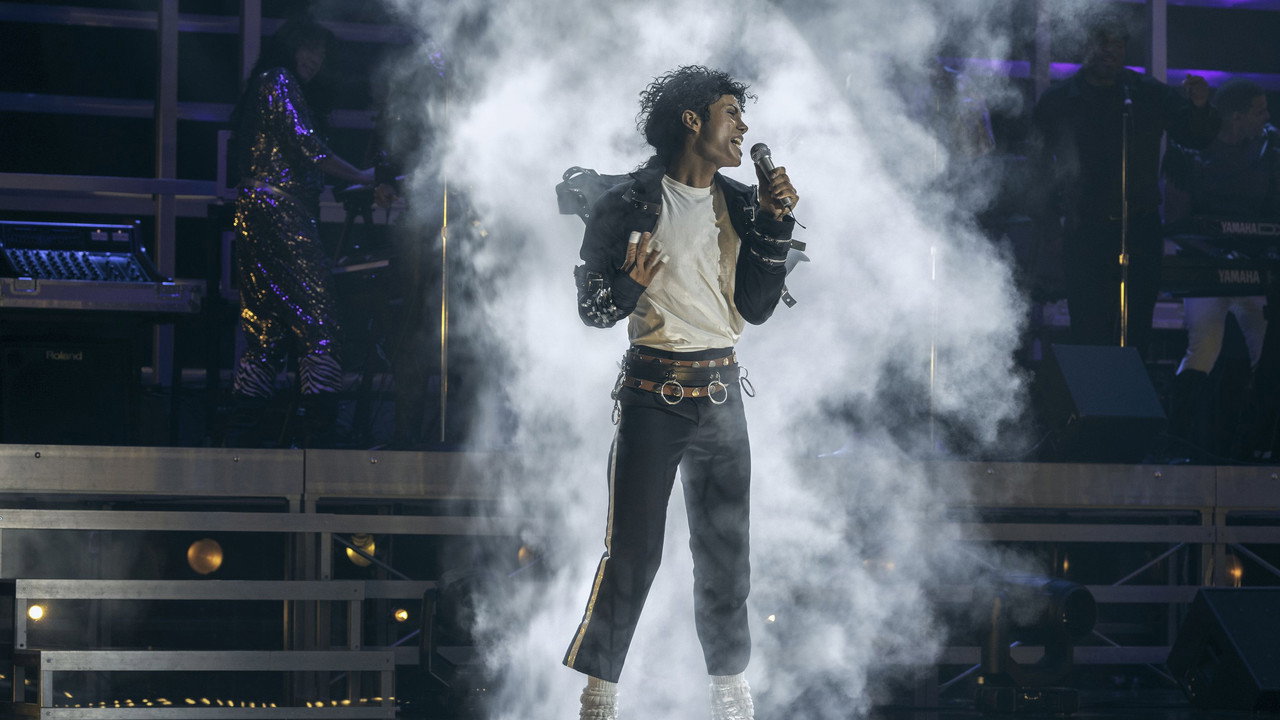
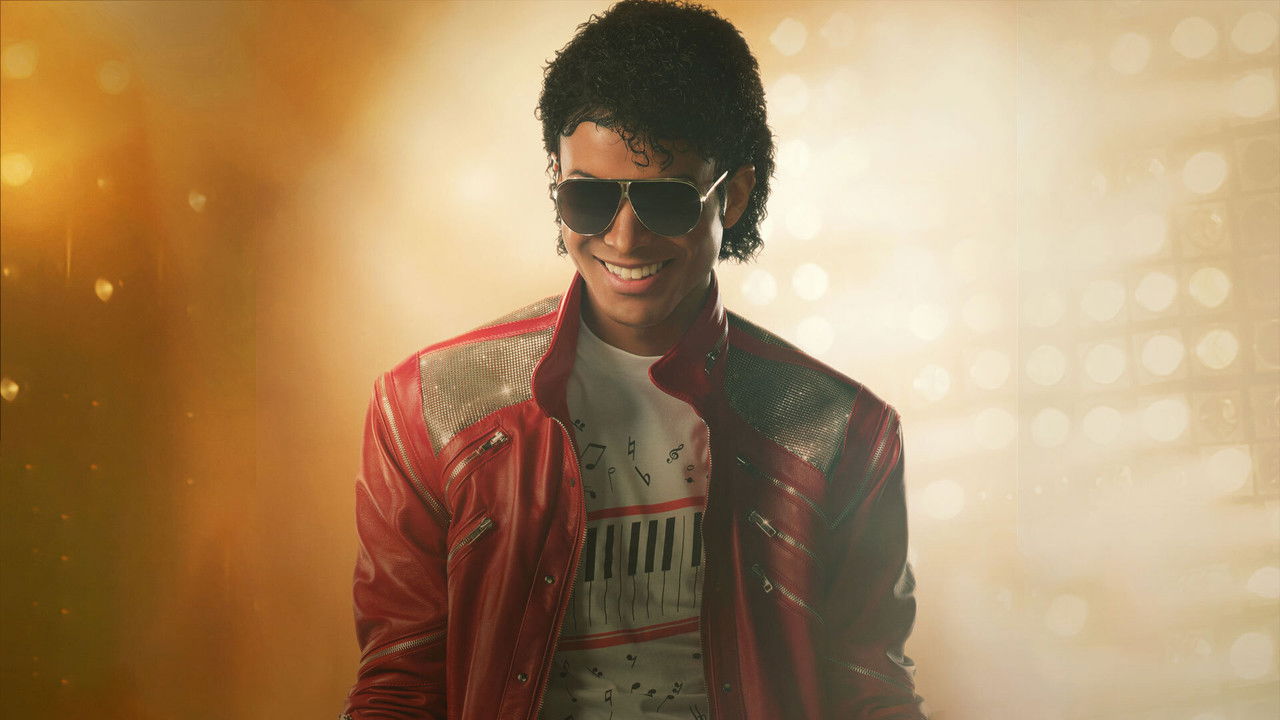
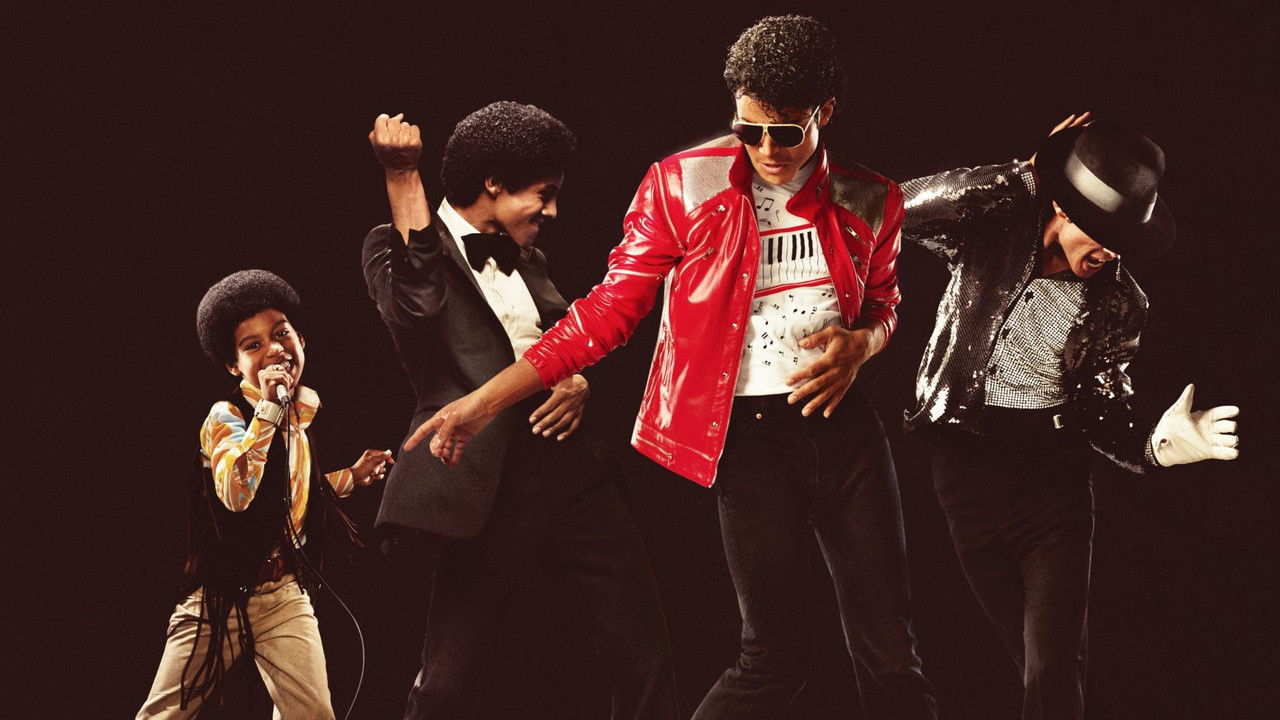
Jaafar Jackson, Michael's nephew and Jermaine's son, plays his uncle with the kind of attention that takes more than resemblance. He moves like Michael. He sounds like Michael. He understands the tilt of the head, the delay before a phrase, the strange combination of softness and command.
The performance sequences are, on craft alone, the best parts of the film. The praise for Jaafar is not wrong. The problem is that the movie around him keeps asking his performance to carry truths the script is not allowed to say.
What the film does not show is more telling than what it does.
Janet Jackson, Michael's sister and one of the most famous performers of the last forty years, is not in the film. Her name is not spoken. She is not depicted. La Toya Jackson said Janet was asked and "kindly declined." That explanation should be respected. The absence still matters.
Because this is not a distant sibling. This is Janet Jackson. Her omission from a family-driven Michael Jackson biopic is not a footnote. It is a structural silence.
The film originally included material connected to Michael's 1993 sexual-abuse allegations. Trade reporting from Variety has described a 22-day reshoot in 2025 to remove that material, after estate lawyers confronted a confidentiality clause from the 1994 Jordan Chandler settlement. The reshoots delayed the film's release from April 2025 to April 2026. The reported cost landed around $10 to $15 million and was covered by the estate, which received an equity stake in the film as a result.
The biopic that exists is the biopic the estate permitted to exist.
That does not make the craft fake. It makes the honesty bounded.
Anyone watching the film should hold both facts at once.
My partner Cordelia Witty, who co-founded TVI Kids with me and brings a school psychologist's lens to this work, put it more plainly during our viewing. The editing of Michael's story, especially now that he is gone and has no say in what the film reflects, is an extension of him being repressed, limited, or filtered, the same constraint he spent his life trying to escape.
He just wanted to be himself, she said, and that was everything to him.
The cost of mastery
Where the film does land, and lands cleanly, is in its depiction of what it costs to become exceptional at anything.
I should say plainly that I am a huge fan of Michael Jackson the artist.
Not the mythology. Not the estate product. The artist.
The musician who could make rhythm visible. The dancer who treated silence like choreography. The vocalist who understood that a breath, a gasp, or a heel strike could carry as much information as a lyric.
That admiration does not make me less skeptical of the film. It makes the film's omissions more frustrating, because the art is strong enough to survive honesty.
That level of talent does not happen by accident.
The early sequences with the Jackson 5, the Motown rehearsals, the repetition, the children stripped of their childhood by a father who understood that mastery is grinding repetition, all of it is shot honestly. Talented but not polished at the start. Increasingly polished as the film moves through Off the Wall and Thriller.
The audience gets to enjoy the product. The film does the harder work of showing that the product came from the shitty part too.
This is the angle most critics have undersold. Film criticism is often better at identifying narrative omission than physical repetition. But anyone who has trained at something with unforgiving reps recognizes the pattern.
Surgical residents recognize it. Concert musicians recognize it. Special-operations candidates recognize it.
Thousands of mundane reps, conducted in private, under conditions of repeated failure, producing a public output that looks effortless. The cost is not just time. It is the narrowing of the self around the work.
What the film captures, and what is worth taking seriously about it, is that the cost is real and the product is also real.
Both.
Not one or the other.
The discipline that gives the world Billie Jean is the same discipline that consumes the child who was supposed to grow into the man who could enjoy having made it.
That is why the performance sequences work even when the film around them is compromised. They remind you why people cared this much in the first place. Underneath the estate's management and the inherited pain, there was an artist of almost frightening sensitivity and control.
This is not unique to Michael Jackson. It is unique to mastery.
Michael is one of very few recent biopics to depict it without either glamorizing it or moralizing about it.
That is why the Educational Value sub-score does not fall lower. The film teaches what the cost of mastery looks like at the level of craft. The deeper developmental cost of Michael's childhood fame, the way reciprocal social mirroring shapes identity formation and what happens when that mirroring is replaced by fame, deserves its own treatment. Cordelia's companion piece will address it directly.
The high-thirties and high-nineties split
Michael is sitting inside one of the most predictable and revealing splits in pop biography: critics in the high thirties, audiences in the high nineties.
That split is not proof that one side is stupid.
It is proof they are watching different films.
Critics are reacting to the managed biography. Audiences are reacting to the resurrection of the performer.
Our score of 121 lands between those reads, closer to the critical response because structure matters, but not so low that it pretends the craft failed. It reflects the actual film: solid craft inside structural constraints the production chose not to fully acknowledge.
Verdict
Worth watching as cultural document, not as biography.
Jaafar Jackson deserves the next role on his own merits. The music sequences are among the best concert-film material since Rocketman. But the film cannot be evaluated honestly without naming the constraints it was made under, and almost no review has named them clearly enough.
Watch it for the craft.
Read elsewhere for the man.
The strangest thing about Michael is not what it left out. It is that the leaving-out is the most truthful thing in the film.
The biopic about a man who was never permitted to be himself is itself a biopic that was never permitted to be itself. The repression of the subject and the repression of the work are not separate facts. They are the same logic, fifty years apart.
The film exists to remind us he did not get to be.
---